

TFP_ Show Notes • Episode #002 • Gary Taubes • Part 1
Four decades of reporting on bad science meets the cholesterol hypothesis, energy balance tautology, and suppressed history of obesity research.

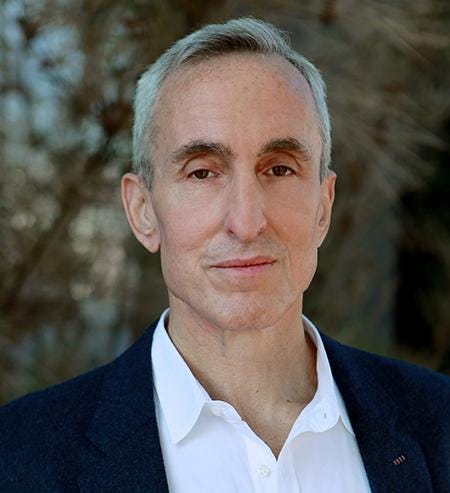
Who is Gary Taubes? Four decades of science journalism and bad science [0:59]
• Dave opens with a simple prompt: tell me who you are and what you do.
• Gary describes himself as a journalist still, focused on science, health, and investigative reporting — an identity he returns to throughout the conversation as both a credential and a limitation.
• His background: physics and engineering undergraduate, then science journalism, then an embedding at CERN — the big physics laboratory outside Geneva — to write a book about what he was told would be an imminent Nobel Prize-worthy breakthrough.
• What he witnessed instead was some of the smartest physicists in the world realizing, slowly and painfully, that they had misinterpreted their own data. That experience set the course for everything that followed.
• “I became obsessed with how hard it is to do science right and how easy it is to get the wrong answer.” He has been writing about that one way or another for the past 40 years.
• His second book was on cold fusion — the great scientific fiasco of the 1980s. He interviewed 300 people, including every graduate student and technician he could find, on the logic that grad students “haven’t learned to lie yet” (a line he attributes to Nobel laureate Leon Lederman, who liked to walk the lab at night for exactly that reason).
• After cold fusion, physicist friends told him: if you’re interested in bad science, look at public health. It’s terrible. That referral launched the work that would eventually become Good Calories, Bad Calories.
Cold fusion as a masterclass in how scientific fields go wrong [3:57]
• Dave notes that cold fusion seemed to disappear from headlines — but Gary corrects this: it never went away. It asymptotically approaches zero but never reaches it. You can never prove something doesn’t exist.
• The pattern he describes: initial reports showed enormous effects (cold fusion cells allegedly exploding in laboratories). Then, as more qualified researchers got involved — people who actually spent their careers doing calorimetry — the effect size shrank and shrank. Better technology, more expert operators, smaller effects. The effect asymptotically approaches zero without ever reaching it.
• Why it never dies: you can never prove something doesn’t exist. There’s always residual measurement error, always someone who wants to believe in a miracle technology, always a shyster willing to sell the idea. He notes that Google put $5 million into reassessing cold fusion roughly five to ten years ago. His reaction: “Just call me. For one-thousandth of the price, I’ll say no.”
• The name has changed — it’s no longer called cold fusion, it’s “low-energy nuclear reactions” or various other framings. But it’s still the same phenomenon: ways to defeat the first law of thermodynamics.
• His broader point: his area of study is bad science. This primes him to see it everywhere he looks — which is also the legitimate criticism of him. “I see bad science everywhere I look, whether it’s there or not. But my perspective is I think I can recognize bad science.”
Nutritional epidemiology and the sociology of the detector [13:46]
• Gary draws an analogy between physics experiments and epidemiological cohorts. In physics there are two groups: those who built the detector and those who came later to analyze its data. Builders know its limitations. Latecomers trust what the machine produces.
• In nutritional epidemiology the detector is a large prospective cohort — like the Nurses Health Study, 110,000 nurses, surveys every two years. People come along later to mine it for associations.
• The associations are not between a disease and a dietary item. They are between a disease and the kind of person who preferentially eats that item. Confounding by a thousand unmeasured variables.
• The builders know this. But they have been working with the cohort so long they have convinced themselves it is trustworthy. Nobody warns the newcomers. The same sociology that corrupted the physics experiment plays out identically.
What makes a science functional: testability, speed, and the cost of being wrong [16:00]
• Gary’s framework for evaluating fields: the easier and cheaper it is to test a hypothesis, the more functional the science. More people do the tests, less time elapses between hypothesis and test, less emotional and cognitive investment accumulates before the idea is either confirmed or killed.
• Physics works well because you can go into the lab on a Friday, read a new theory, scavenge equipment over the weekend, and have a result by Monday. He gives the example of Richard Garwin — a physicist Enrico Fermi called the only true genius he ever knew — who helped design the hydrogen bomb as a graduate student over summer vacation and who colleagues wouldn’t design experiments without consulting first.
• Nutrition, climate science, and other fields where hypotheses cost $50–100 million to test are the opposite. When experiments are that expensive, the pressure to get a positive result is profound. When you finally spend that money and get a result, you’re not going to report it as a failure even if it is.
• He gives the example of NIH-funded diabetes studies: the tests were run, the hypotheses failed the tests, and if you go to the NIH website, you wouldn’t realize that because the language frames everything around the good things the study accomplished. The failure to support the dominant hypothesis is buried or absent.
• Dave connects this to his own engineering background: software is built with tests. Hypotheses fail fast, there’s no emotional investment yet, you go out of business if you don’t fix what’s wrong. The culture of falsification is built into the work.
The LDL debate, lean mass hyperresponders, and the Bradford Hill strength criterion [26:48]
• Dave introduces the natural experiment that has emerged from the low-carb movement: people who have increased dietary fat not by 10–20% but by living exclusively on fat, producing massive changes in LDL and ApoB that would have been unimaginable 20–30 years ago.
• His argument: because the magnitude of change is so large, you need a smaller sample size to detect a signal. And the Bradford Hill criterion of strength — bigger effects suggest causation more compellingly — should at least be applicable here.
• Gary’s pushback is characteristically careful. Yes, theoretically. But it’s a self-selected population, not randomized, and you don’t know if the people who choose to eat this way are different to begin with. He concedes the study Dave references is the first of its kind — prospective, in a population with sky-high LDL but otherwise low metabolic risk.
• He makes a distinction Dave finds useful: Dave’s findings might be entirely valid for people who are fat-adapted and living on ketogenic diets. But whether they speak to the broader LDL hypothesis for the rest of the world is a separate question. The model might not generalize.
• On the statin debate specifically: he points out the absolute versus relative risk issue. A 25% reduction in relative risk, as reported in press coverage he cites from Gina Kolata at the New York Times, turns into something like 26% down to 22% in absolute terms — a 4% absolute risk reduction. Whether that’s worth a lifelong intervention is, he says, a poker player’s calculation about marginal risk.
Stopping trials early and what poker teaches about statistical fluctuations [39:17]
• Dave’s concern with powering against events: when a trial hits statistical significance it gets stopped, sometimes well before the planned endpoint. The justification is ethical. His concern: if it had run longer, it might have lost significance as variability evened out. Permanent conclusions drawn from fluctuations.
• Gary uses poker to make this visceral. He moved from LA to New York and lost consistently for an entire year despite being a winning player in LA. He spent the year analyzing what he was doing differently. He could not find it. His luck changed. He concluded it was a year-long statistical fluctuation. And you can have a two-year one.
• Dave deepens it: approximately 2,000 hours of completely consistent play are needed for poker probabilities to even out. Every session-level assessment is statistically meaningless. Clinical trials stopped at the first flicker of significance face the same problem.
Pre-registering studies and the culture of science gone wrong [58:17]
• Dave argues every study should pre-register its hypothesis and methodology with the publishing journal before starting, committing to publication regardless of outcome. Gary agrees but notes pre-registration already exists and is not the norm.
• The deeper problem: researchers would run experiments with existing grant money first, see what they were going to find, then write the NIH grant proposing those experiments. You need positive results to keep getting funded.
• Limitations sections as symptom: once a page and a half of everything you should criticize about the study. Now a single paragraph, one limitation, explained away, followed by a pivot to the strengths. This is not science as he understands it to work.
• In the epilogue of Good Calories Bad Calories he almost never uses the word scientist to describe nutrition and obesity researchers, because they do not function as scientists as he understands the word. The few times he does, those people were genuinely interested in rigorous testing and honest interpretation.
• His advice to Dave on the LMHR study: get Alan Sniderman to read it before publication. Once you publish you defend rather than consider. Dave pushes back: he has been burned before sharing sensitive work, and publication timing is already on rails with a large team.
Sam Ting and the J/ψ particle: the gold standard for anomalous observation [1:04:37]
• MIT physicist Sam Ting, running an experiment at Brookhaven, upping the energy and seeing an enormous effect — like tuning a car radio through static and suddenly landing on a crystal-clear station that should not be there.
• The effect was so large that Sam sat on it for six months trying to figure out how he screwed up. He could not. During those six months Stanford heard the rumor and found it too. Sam had to rush to press simultaneously. The particle is named J/ψ: J for king in Chinese (Ting’s name), ψ from Stanford. Credit was split because Sam spent six months refusing to believe he was right.
• Gary’s point: none of this skepticism culture exists in nutrition science or cholesterol research. The incentive structure runs entirely the other direction: get an effect, publish, get students their papers, get funding.
The carbohydrate-insulin model and the lipid energy model [1:12:00]
• Dave states the Lipid Energy Model: people like him run at super-high LDL and ApoB without corresponding plaque because their lipid physiology is not impaired. All prior data at scale has had some impairment — acquired (insulin resistance) or congenital (familial hypercholesterolemia). Both alter the lipid profile and independently associate with atherosclerosis. A clean signal of high LDL in physiologically functioning fat-adapted metabolism has never been studied. That is what the LMHR study is for.
• Gary frames the carbohydrate-insulin model as the dietary implication of a bigger fuel partitioning hypothesis: fat accumulation is regulated by neuroendocrine signals, not caloric intake. Insulin is the dominant storage hormone. As long as it is elevated, fat cells hold their stored fat. The nervous system drives lipolysis. Obesity is a dysregulation of this balance.
• The carbohydrate content of the diet drives insulin secretion. Industrial processing of grains and sugar changed carbohydrate quality beginning with the industrial revolution. You would expect insulin to rise, fat storage to increase, and obesity and diabetes to rise in parallel. They did.
• Writing Good Calories Bad Calories, Gary kept finding the same hypothesis manifesting across separate fields: obesity research, heart disease (Jerry Reaven at Stanford and metabolic syndrome), diabetes, physiological psychology (Claude Bernard, Walter Cannon, homeostasis), and colonial physicians tracking nutrition transitions in populations worldwide.
The energy balance tautology: why eat less move more is circular reasoning [1:14:31]
• Gary’s most precise argument in the episode, currently in live debate with a leading obesity researcher.
• The tautology: you observe someone gaining weight. You assume they must be overeating because they are gaining weight. You conclude overeating causes obesity. You use the weight gain as proof of the overeating. You never measured how much they ate. You never compared it to lean people. The measurement of fat accumulation is simultaneously the evidence for and the conclusion about its cause.
• A testable prediction would be: if you do not change how much you eat, you do not get fatter, unless your metabolism slows, which you could measure. But the hypothesis as deployed does not make this explicit because no one actually measures intake and expenditure independently of weight change.
• He distinguishes testing the null hypothesis (energy balance) from confirming the alternative (carbohydrate-insulin model). P values and significance testing are formally designed to test the null. Dave’s LMHR study refutes the null prediction that high LDL must associate with plaque formation.
• His ongoing debate: he is trying to get a leading obesity researcher to design experiments that would refute the null — create fat accumulation without increasing intake, or increase intake without increasing fat accumulation. The researcher wants to confirm the alternative. They are not asking the same question.
The suppressed history: European obesity research from 1897 to 1933 [1:14:51]
• Gary is most animated here. This is the heart of his next book and the most historically under-known material in the episode.
• Late 19th century: von Noorden quantifies the energy balance hypothesis in his obesity textbook. Through the 1910s, researchers try to show obese people expend less energy. They fail. Max Rubner’s comparison of a lean and obese brother shows the obese brother expends more energy because bigger bodies require more energy to maintain. He eats no more. He is still obese.
• By the 1920s the European medical establishment shifts to the neuroendocrine fuel partitioning hypothesis: fat accumulation is regulated by the nervous and endocrine systems, not caloric intake. By 1929 this is broadly believed in Europe. The major proponents are Julius Bauer, a founder of genetics and endocrinology, and other Jewish physicians in Germany and Austria.
• Bauer’s key insight via an American growth hormone dog experiment: the treated dog develops a voracious appetite. But no one would think growth hormone makes the dog hungry. Growth needs fuel; needing fuel makes the dog hungry. Obesity works the same way. Being constitutionally disposed to store fat makes you hungry; eating voraciously does not make you fat.
• Then 1933. The Nazi party comes to power. The major proponents are almost all Jewish. They can no longer travel to conferences. The neuroendocrine fuel partitioning hypothesis effectively vanishes from the scientific literature.
• Post-World War II: young American researchers flood the field, NIH is newly funded, and the only literature they read is American, which never abandoned gluttony and sloth as the explanation. The anomalous observations that demolished energy balance are simply ignored.
• By the 1960s psychologists dominate and obesity becomes classified as an eating disorder. Gary’s summary sixty years later: we say obesity is not an eating disorder, but it is caused by eating too much, and ultra-processed food is addictive, but it is not a behavior.
Anomalous observations that cannot be explained by energy balance [1:18:19]
• Progressive lipodystrophy: predominantly in women, all fat is lost above the waist while obesity accumulates below. How does eating too much selectively deposit fat in only half the body?
• Spinal cord injuries: patients become obese below the level of the injury and lean above it. Physical inactivity might explain some of it — but why does the upper body stay lean?
• Animal experiments: severing the nerve to one leg but not the other in frogs. The denervated leg gets fatter. Nothing to do with energy expenditure. The nervous system is directly regulating fat storage at the tissue level.
• The skin graft case circa 1913 to 1915: a girl had a burn on the back of her hand and received a skin graft from her stomach. Fifteen years later she is obese and the graft on her hand is puffed out with fat. Whatever determines whether tissue accumulates fat was transplanted from one part of the body to another. It cannot be explained by energy balance.
Food noise, GLP-1 drugs, and the fuel partitioning explanation [1:56:29]
• Dave describes the experience that changed his thinking about hunger: after starting LCHF in 2015, the food noise went away entirely. He had spent his adult life in near-constant preoccupation with his next meal. On LCHF it disappeared. He first saw Steve Phinney use a similar phrase to describe this in 2011.
• GLP-1 receptor agonist drugs (semaglutide, Ozempic, Wegovy) are described as suppressing food noise through brain appetite neurons. But food noise disappears on ketogenic diets without any GLP-1 agonist.
• Dave’s unified mechanism hypothesis: on a ketogenic diet, fat oxidation goes up and the liver produces ATP from fat. A longstanding theory holds that ATP production in the liver signals to the brain through the vagus nerve that fuel is available, suppressing hunger. Maybe GLP-1 drugs work partly through the same peripheral fuel partitioning mechanism rather than purely on brain neurons.
• Gary’s observation: the obesity world will not consider this because they see the drugs produce weight loss associated with eating less, assume eating less causes the weight loss, and conclude the drugs cause eating less. The tautology persists even in the GLP-1 era.
The history of low-carbohydrate diets: from Banting to Atkins to Gary’s own experiment [2:09:00]
• 1825: Jean Anthelme Brillat-Savarin, French lawyer, writes The Physiology of Taste, still in print 200 years later. After interviewing hundreds of obese people he concludes they all crave bread, potatoes, and sweets, and managed his own weight by abstaining from what he called the farinaceous elements of the diet — carbohydrates.
• 1865: William Banting, a British undertaker obese his whole life despite trying everything, is put on a very low-carbohydrate diet by an ear doctor who had heard Claude Bernard lecture in Paris. Banting loses 40 to 50 pounds, writes a pamphlet, it sells out, and the Banting diet becomes the first worldwide diet craze and the standard of care for obesity through the 1930s.
• Then someone calculated Banting’s diet was only 1,200 calories and reclassified it as a low-calorie diet. This really screwed up the field — eating less carbohydrate and eating fewer calories produce entirely different neuroendocrine responses, but the calorie-counting frame erased that distinction for decades.
• For diabetes: from 1797 until insulin was discovered in 1921, the standard of care was the animal diet — fatty meat and green leafy vegetables. Once insulin was available the diet was abandoned and patients were loaded with exogenous insulin, producing, Gary argues, metabolic syndrome and early cardiovascular death in type 1 diabetics.
• Gary’s own experiment in the late 1990s: at roughly 235 pounds, years into a low-fat diet, he tried Atkins after a tip from a MIT professor. Lost 25 pounds in six weeks eating melted provolone with sausage and the biggest steaks available. He expected to die of a heart attack any second but as an experiment it was invaluable. The experience opened him to clinical trials that replicated it. A lean person cannot have this experience, which is why lean people cannot be convinced by dietary self-experimentation.
What you see is all there is: Kahneman and the limits of scientific inference [2:15:33]
• Gary invokes Daniel Kahneman’s WYSIATI — What You See Is All There Is — from Thinking, Fast and Slow as the most profound insight for understanding how researchers reach conclusions that seem incomprehensible from the outside.
• If you can understand what a researcher is seeing, you can understand why their conclusions seem rational from their perspective. They are reasoning correctly from a limited and systematically biased information set.
• The political parallel: randomize 17-year-olds to read only the New York Times or only the Wall Street Journal for 15 years and you will produce entirely different worldviews from the same raw intelligence. What you see determines how you think. The same mechanism operates in nutrition science.
• Dave connects this to engineering: engineering is designed with the expectation of unknown unknowns. You build margins of error for things you do not know you do not know. Nutrition science lacks this culture. WYSIATI fills the gap.
Closing: Part 1 ends; Part 2 teaser [2:21:20]
• The conversation ends as Part 1. Own Your Labs — direct-access affordable lab testing — is noted as the sole sponsor keeping the podcast free.
• Part 2 teaser: Gary is asked whether one subtext of his talk is that we are all idiots. His answer: yeah, that is fair, but I cannot say that. Dave: but it was exactly the right question.
• Part 2 continues the carbohydrate-insulin model, what it would truly mean to test it, and Gary’s ongoing engagement with the obesity research establishment.