

TFP_ Show Notes • Episode #004 • Nick Norwitz • Part 1
Osteoporosis at 21, IBD at Oxford, and how a ketogenic diet changed everything — the full patient story behind the researcher.

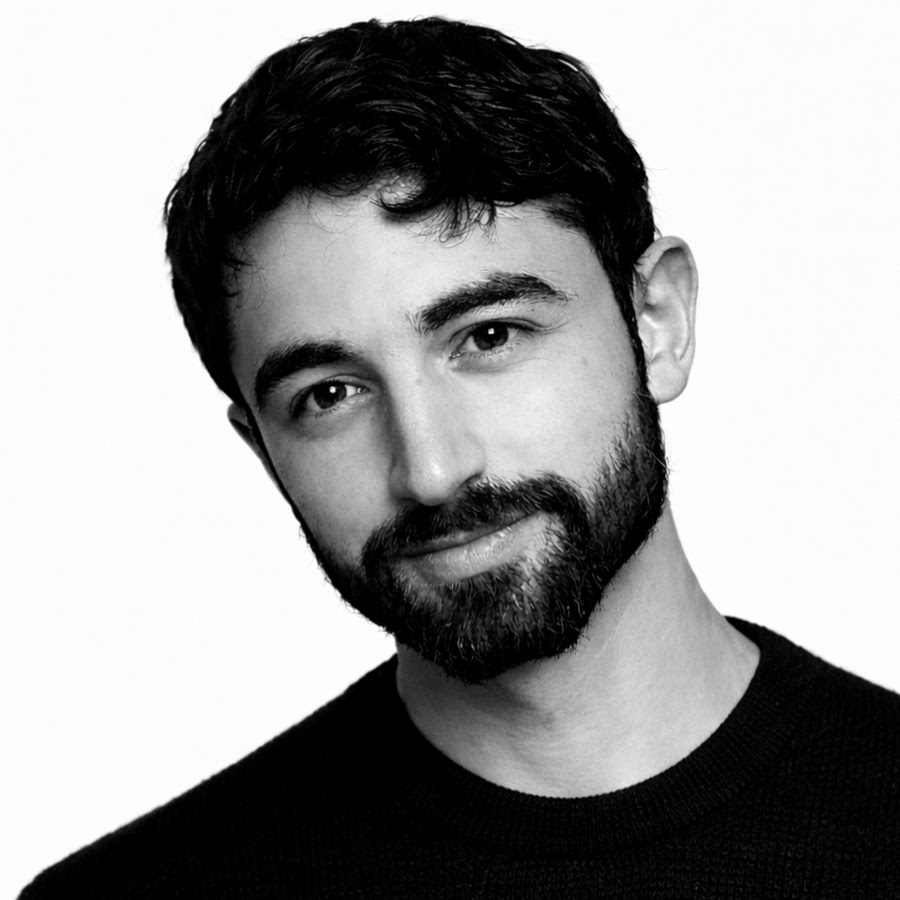
Who is Nick Norwitz? [1:16]
• Nick introduces himself as a PhD researcher focusing on metabolism. He received his PhD from Oxford and is a fourth-year Harvard medical student graduating in May, at which point he is figuring out what to do with his life.
• His stated life mission, which he repeats often enough that he hopes saying it will help him figure out how to achieve it: make metabolic health mainstream.
• The big decision he made seven months before this recording: not to apply for residency. Both his parents are physicians. He grew up in a family of five that has nine doctorates between them — his father is a Rhodes Scholar. The internal pressure to follow the conventional path was profound even without tiger parenting. Residency was always in his mind’s eye as the right thing to do.
• His reasoning for stepping off: he thinks he can have a bigger impact outside the system than within it. Scary, but immediately liberating. Since making the decision, he has been “bounding with enthusiasm” for multiple projects.
The health story that has never been told at length: osteoporosis at 21 [5:03]
• Nick’s health story starts before the GI problems most people know about. At 16–17, he got into distance running and was immediately competitive. At 17, he was running 2:45 marathons. When he decided to do something, he did it at 110%: at 13 he decided to break the school push-up record and ended up breaking the state record. At 17, in zero-degree Boston winters, Sundays were 22-mile run days followed by the gym.
• In his first year of running he ran approximately 3,000 miles and won multiple age-group titles at half marathons and marathons. Then the stress fractures started. The first wasn’t alarming — stress fractures are common in distance runners. The pattern that developed was alarming: fractures at higher and higher frequency, at lower and lower mileage thresholds, taking longer and longer to heal.
• The progression: from 90–100 mile weeks before any issues, to 60, to 40, to 20. Eventually, frustrated and trying to cross-train, he entered his first sprint triathlon. The running portion is only a 5K. Midway through, a bone in his foot snapped in half. An initial X-ray missed it. He walked around on it for a week, including on a date where he could not get his shoe on because of swelling. An MRI confirmed the fracture.
• After two years of recurring fractures, doctors finally agreed to a DEXA bone density scan — something they had been reluctant to order because every other marker was normal: testosterone, BMI, thyroid, lipids. He was a healthy young man. There was no reason to scan him.
• The scan revealed a T-score 3.2 standard deviations below the mean. Clinically diagnosable osteoporosis. The bone density of a 70 or 80-year-old. He had not had that bone density his whole life — he had run 3,000 miles without a fracture in his first year. Something had happened to his bones.
The diagnosis that didn’t fit: REDS, and the LRP5 gene [9:52]
• The preliminary diagnosis from his doctors was Relative Energy Deficiency in Sport (REDS) — a sex-neutral form of the female athlete triad. The theory: he was not eating enough to support the bone maintenance demands of the training load, so his body could not rebuild properly.
• Nick’s problem with this diagnosis, which he researched even as a high school senior and college sophomore: his BMI was 21, his testosterone was normal, his thyroid was normal, he had no clinical or laboratory signs of under-eating. He can also testify as a human being that he was not under-eating. He would finish a run and chug a jar of Nutella. His doctors did not entirely believe him, as patients sometimes do not accurately report food intake, so the nutritionist prescription was just to eat — including lots of carbs and sugar. He was getting calls asking if he had had his 10am pasta between breakfast and lunch.
• The magnitude problem: he found women in the literature with BMIs of 13 maintained for years with better bone density than he had. REDS could not explain the severity of his bone loss.
• The actual answer, which he found by digging into his own genetics: a rare polymorphism in a gene called LRP5. What LRP5 does, simplified: it mediates bone’s response to mechanical stress. When you load muscles, they adapt and grow. Bones work the same way. If you have a dysfunction in that pathway, high-impact loading does not make your bones stronger — it makes them weaker or unable to rebuild properly.
• Treatment involved experimental therapies given his age. He backed off the running. His trabecular bone (spongy inner bone) improved on medication. His cortical bone (the outer shell) did not — until he started a ketogenic diet. He notes the new literature on ketones activating receptors like HCA2, which are present on bone cells, as a possible mechanism. He wrote a case report on his own bone pathology as his first-ever first-author paper, at age 20 or 21. The endocrinologists treating him eventually signed on as co-authors. He had converted them to his side by doing the work they did not have time to do.
• Dave’s observation: there is something to be said for the fear and panic and deep urgency of solving your own health problem that gets underestimated. If you are really driven, you can make real strides. Nick had, at that point, technically only a high school education. It almost seemed arrogant to try to solve the problem his doctors hadn’t. But he got to the point of desperation where he realized he was the most motivated person to find the answer.
Oxford, ulcerative colitis, and palliative care at 23 [23:59]
• Around the end of college at Dartmouth, Nick started developing GI symptoms — initially mild diarrhea and bloating after eating. He did not connect this to diet, partly because he was embedded in college athlete culture where you eat everything and partly because his identity as the lean, high-energy person who could eat whatever he wanted was deeply ingrained. At one point as a kid his father bet him he couldn’t eat a 12-person ice cream. He ate the whole thing.
• The symptoms escalated. By the time he was at Oxford for his PhD, he was having multiple bouts of bloody diarrhea daily, uncontrollable and unpredictable. Not typical bathroom discomfort — the sensation of blood in the intestines is a different category of urgency. He describes it as something that cannot be held for an hour. It burns like nothing else.
• The social and psychological toll was significant and largely hidden. He was good at faking and compensating. He stopped telling friends. He slowly withdrew. The most anxiety-provoking moment was his valedictorian speech at Dartmouth graduation in front of 11,000 people: not anxiety about the speech, but about the possibility of a flare mid-address. He risked it. Nothing happened. But he watched the recording back later and said you could not see it on his face. Inside, he was absolutely tortured.
• At Oxford, things hit their worst. He ended up losing weight to dangerously low levels and was admitted to the NHS hospital. He was placed in a palliative care ward — not hospice, which implies six months to live, but a ward with bed-limited placement where he was the youngest patient by at least half a century. People with dementia were screaming around him. He could not sleep for three days. His heart rate was in the 20s.
• His mother flew over from the United States. He has never forgotten what that felt like to see her reaction to finding him there — the person who had always been the high-performing athlete and academician, now lying in a hospital bed with a heart rate of 30 and brain fog. There is a picture from that period of the telemetry monitor showing the heart rate hitting 30 that he shares sometimes. The story behind it: an acute nurse walked in, his heart rate jumped from the 20s to 30, and they took a picture as a joke. “Look, you’re responding. You’re in the 30s. You’ve got a little testosterone left.” A light moment in a very dark time.
• He was discharged with a diagnosis of turmeric toxicity. He had been taking curcumin at 1.5 grams twice per day — a standard nutraceutical dose. The physicians found one esoteric case report of someone hyperdosing acutely who developed bradycardia. Not bradycardia in the 20s. They said: you’re athletic and taking a turmeric supplement, that’s probably why your heart rate is low. He had not slept in two days. He just wanted to go home. So he went back to his apartment and lay in bed for a few days, including his 23rd birthday.
June 1, 2019: the day a ketogenic diet changed his life [30:19]
• By this point he had tried low-FODMAP, specific carbohydrate, Mediterranean, pescatarian, vegan, vegetarian, and Whole30. None of them had put his disease into remission.
• On June 1, 2019, he started a ketogenic diet. Within a week he was feeling substantially better. Energy up. Inflammatory markers down. His next colonoscopy biopsy showed no signs of active disease in his colon.
• His initial ketogenic diet was not a standard high-saturated-fat approach. He was not eating dairy or red meat. It was fatty fish, greens, olive oil, and fiber. Despite this, his LDL jumped from approximately 95 to 321 mg/dL. And notably: despite the LDL more than tripling, his small dense LDL went down. The entire driving force of the increase was large buoyant LDL. He was already pattern A before the diet. So he went more pattern A, with higher total LDL and lower small dense LDL simultaneously.
• This did not fit anything he could find in the literature. He had never had high cholesterol in his life. He was not eating much saturated fat or dietary cholesterol. When he cut saturated fat further, his LDL went up. He became curious. He and a clinician friend, Dr. Vivian Low, wrote a paper on why his standard lipid panel might not be telling the whole story — his first foray into lipid science, written before he had any social media presence and before he had encountered Dave.
Finding Dave, the lipid energy model, and the formation of the trio [35:25]
• Nick did not have social media when he first started exploring his lipid response on a ketogenic diet. He had a Facebook for birthday reminders and that was it. He did not start tweeting until 2020. He found Dave the old-fashioned way: PubMed searches on low carb and high cholesterol, which eventually led to CholesterolCode.com and Dave’s work.
• On Twitter, Nick quickly grasped the lipid energy model and started asking the right questions. Dave’s immediate reaction: this guy knows what’s up. The interactions escalated rapidly. Dave had been looking for a young, hungry research partner since Eric Westman told him early on: you need to find somebody young and hungry. Nick was exactly that profile, but more so than Dave could have anticipated.
• Before Nick and Dave connected, there was a third seed that had been planted. At Oxford, Nick had been in the same PhD lab as a Mexican clinician-researcher named Adrian Soto-Mota, who was a year above him in the program. Nick describes remembering Adrian in the exercise physiology lab doing self-experiments. On one occasion, Adrian was eating walnuts and mentioned that when he goes keto he always has to increase his caloric intake by 500 to 1,500 calories to maintain his weight. Nick’s reaction at the time, based on a strict calories-in-calories-out worldview: “This guy’s crazy. This isn’t a real thing.”
• What Nick had not mentioned publicly before: at that same time, he was baking elaborate sugar-filled desserts — seven-layer bars with condensed milk and multiple types of chocolate — and regularly sharing them with Adrian. He was, as he puts it, “poisoning him, although he was always very grateful.” He had a whole childhood club called Baking for Bears where he sold homemade baked goods to raise money for polar bear conservation. He sold a lot of sugar during his adolescence. He calls what he does now karma.
• When Tro Kalayjian was pulling together the first LMHR paper and looking to bring Nick in, Nick suggested Adrian for the mathematical modeling. Dave had not known much about Adrian at that point despite being well-connected in the low carb world. Adrian came in, did his own version of the Feldman protocol, found it worked on him, and became engaged in the research. The three of them working together hit what Dave describes as a new stratosphere.
Keep reading with a 7-day free trial
Subscribe to The Feldman Protocol_ Newsletter to keep reading this post and get 7 days of free access to the full post archives.